
Springfield Resident Lookup Records
Springfield is a Fairfax County community, so a one-person search normally begins with the county or state custodian, not a city clerk. The most useful record depends on the question. An assessment card can connect a name, a mailing line, a situs address, a parcel identification number, and deed references when the owner is displayed. A court index can establish that a name is a party in a particular case. Voter and vital sources have narrower access rules, and a printed directory is evidence of what it printed in one year, not a live household list.
| Record path | What it can confirm | Springfield custodian | Access route |
|---|---|---|---|
| Assessment parcel card | Situs, PIN, assessment, mailing line, deed clues | Fairfax DTA iCare | Free web search; office or phone if an owner name is withheld online |
| Recorded land record | Grantor, grantee, legal description, recording reference | Fairfax Circuit Court Clerk | CPAN, public terminal, Historic Records Center, or clerk copy route |
| Circuit case index | Case number, party role, filing date, status, subtype | Fairfax Circuit Court | Free eCaseSearch for eligible electronic cases; CPAN or courthouse for more |
| Election record | Individual status or qualified list fields under statute | Virginia elections and Fairfax Office of Elections | Citizen Portal, registrar inspection, or qualified request product |
| Vital record or index | Event lead, certificate request, or older local evidence | VDH and Fairfax HRC | VDH request channels; HRC finding aids and research room |
| License or entity record | Official professional or organizational identity | Virginia DPOR, DHP, or SCC | State lookup or formal records route |
Use an exact address or PIN when the question is about a parcel. Use a full name plus another key, such as a filing date, case number, directory year, or deed reference, when the question begins with a person. The Fairfax iCare assessment site and Circuit Clerk records are complementary, not interchangeable: the first is an assessment snapshot, while the latter is the legal land-record route.
Matching Springfield Names to Addresses
A same-name result is only a lead. Fairfax research is more dependable when it joins two independent details, such as a name and exact PIN, a party role and filing date, or a directory entry and its printed address. Start with the iCare address search when a street number is known. Save the situs, mailing line, parcel number, subdivision, and deed book or page clues. A separate mailing address may not be the property location, and an online card can display an owner name as withheld by request.
For a name-first question, try spelling, initials, punctuation-free forms, and prior surnames only where the record itself supports them. Then record the source date and the source's role. A deed grantee can be a trust, estate, or company. A printed directory can be voluntary or subscriber-based. A professional license address can be a practice address. Those distinctions prevent a familiar name from becoming an unsupported claim about a Springfield resident.
Springfield Resident Lookup Court Search
Fairfax Circuit eCaseSearch is the free public index for nonconfidential Circuit civil and criminal electronic case information. It begins electronic coverage on October 18, 2004. Choose Civil or Criminal, then Party Name or Case Number. Party mode requires a last name or company name with at least two letters; a first name is optional. Start broad enough to catch a spelling variant, then narrow by first name or case type if the result cap is reached.
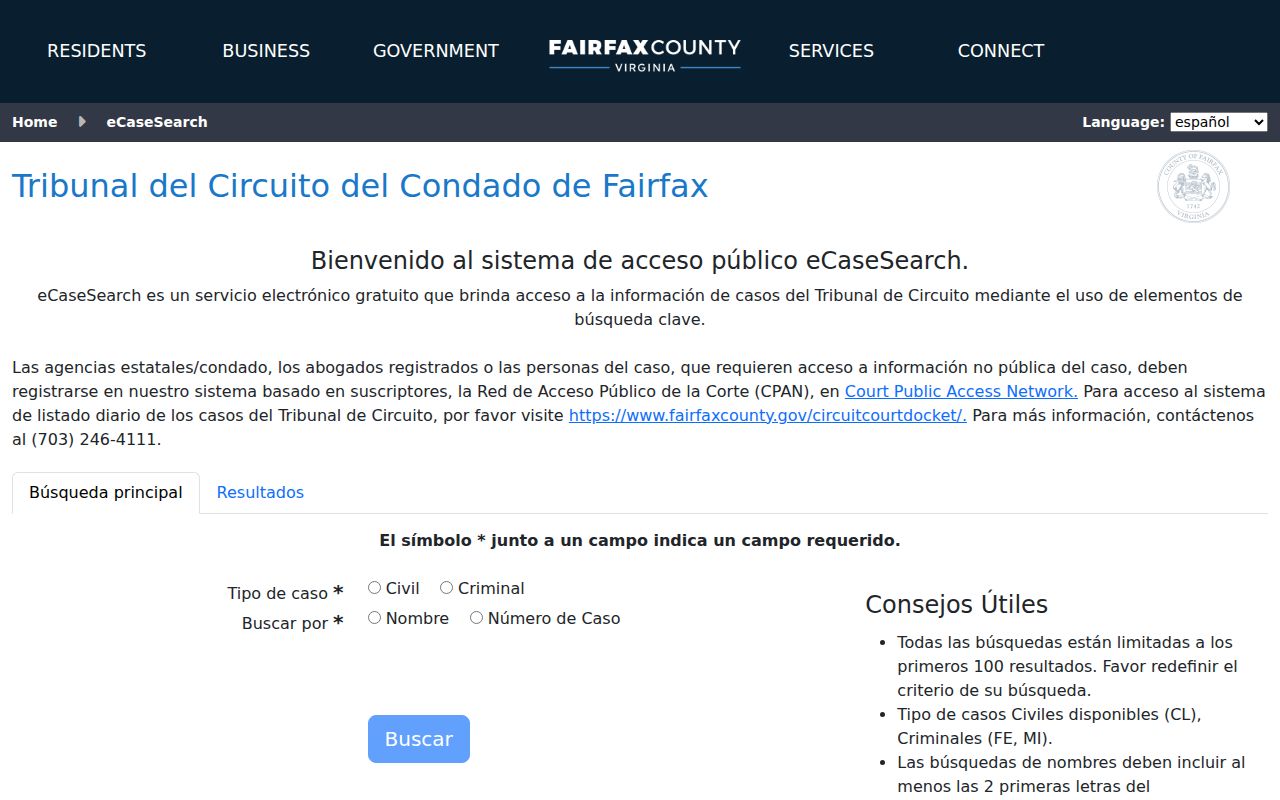
The court screen is a case-index tool, not proof that a party lives in Springfield. It does not promise document images, party address is not a dependable public search key, and confidential or sealed matters do not appear. The county launched eCaseSearch in 2024, which makes the electronic boundary especially important when a name search returns nothing.
| eCaseSearch field | Use and format |
|---|---|
| Case Type | Choose Civil or Criminal before searching. |
| Search By | Choose Party Name or Case Number. |
| Case Number | Required in case-number mode; civil numbers use a CL pattern and criminal results can use FE or MI patterns. |
| Last Name or Company Name | Required in party mode; enter at least the first two letters. |
| First Name | Optional in party mode; use it to narrow a common last name. |
| Search | Runs the selected query; narrow a result set that reaches the 100-result cap. |
| Result item | How to use it |
|---|---|
| Case number | Use it to reopen the case details or request the correct file. |
| Filing date and status | Compare them with the period being researched. |
| Plaintiff, defendant, or other role | Confirm the person was indexed in that role, not merely a similar name. |
| Subtype and attorneys | Use them as case context, not as an address match. |
| Register of actions | Read available events before seeking a fuller clerk record. |
Older, fuller, or file-specific material may require CPAN, a courthouse public terminal, or the Circuit Clerk's file-review request form. The form route notifies a requester within two business days; some older criminal files need advance notice. A missing online case can reflect coverage, spelling, division, or access limits.
Fairfax General District Court uses the statewide court-status route and is separate from the Circuit index. Select Fairfax County, rather than Fairfax City, when that is the correct court. State guidance notes that entry can lag about one to three weeks. For a federal matter, use PACER; a federal filing is not proof of a Springfield address.
Note: An eCaseSearch result needs a case number, party role, date, and independent matching detail before it identifies a Springfield resident.
Springfield Vital Record Requests
VDH's online vital-record request is the statewide path for birth, death, marriage, divorce, verification, and related request types. The workflow asks for the event and person details, requester contact information, relationship or eligibility when needed, ID, signature, payment, and a confirmation or tracking record. It is a request process, not an open certificate search.
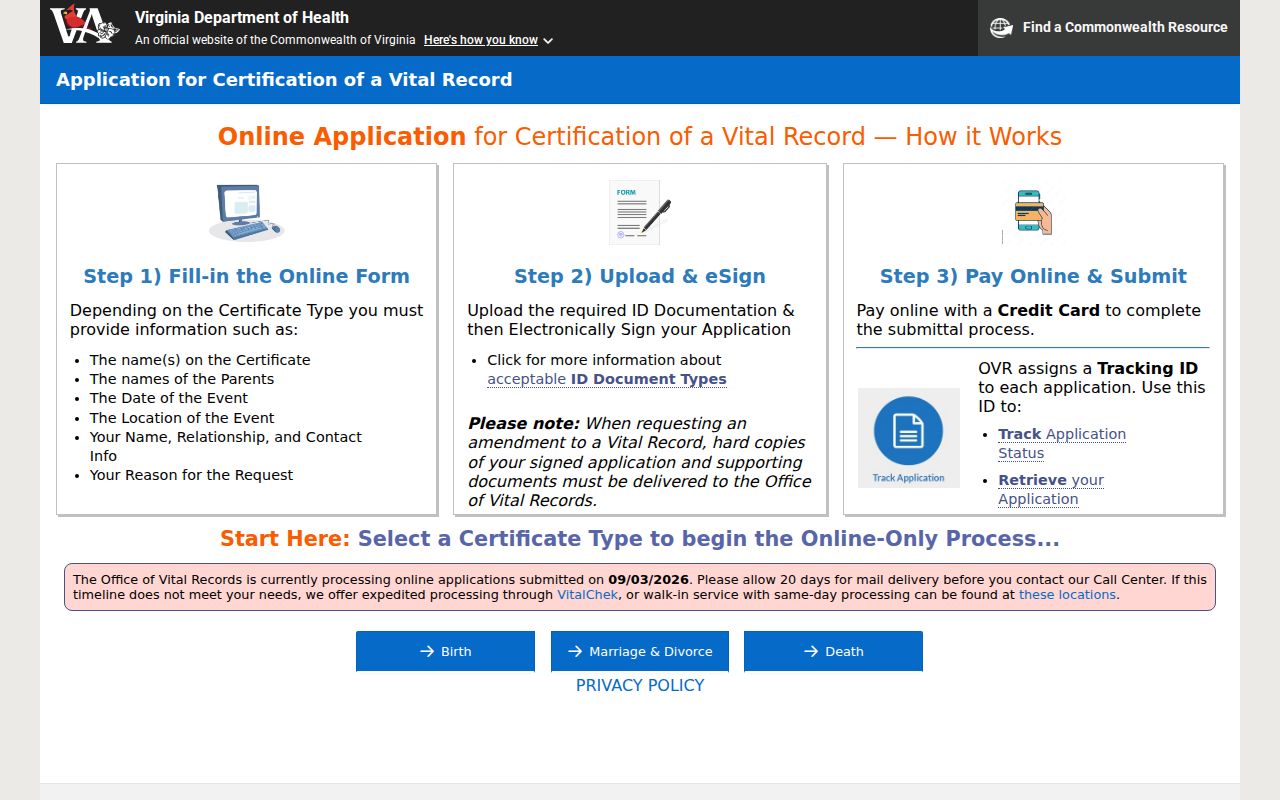
Use the event locality exactly as known. A Springfield event may have been filed as Fairfax County or another locality. Do not guess parent, spouse, or eligibility details. VDH states that birth records become public after 100 years, while death, marriage, and divorce records become public after 25 years. Restricted certificates require the relationship or other eligibility that the agency specifies, plus identification.
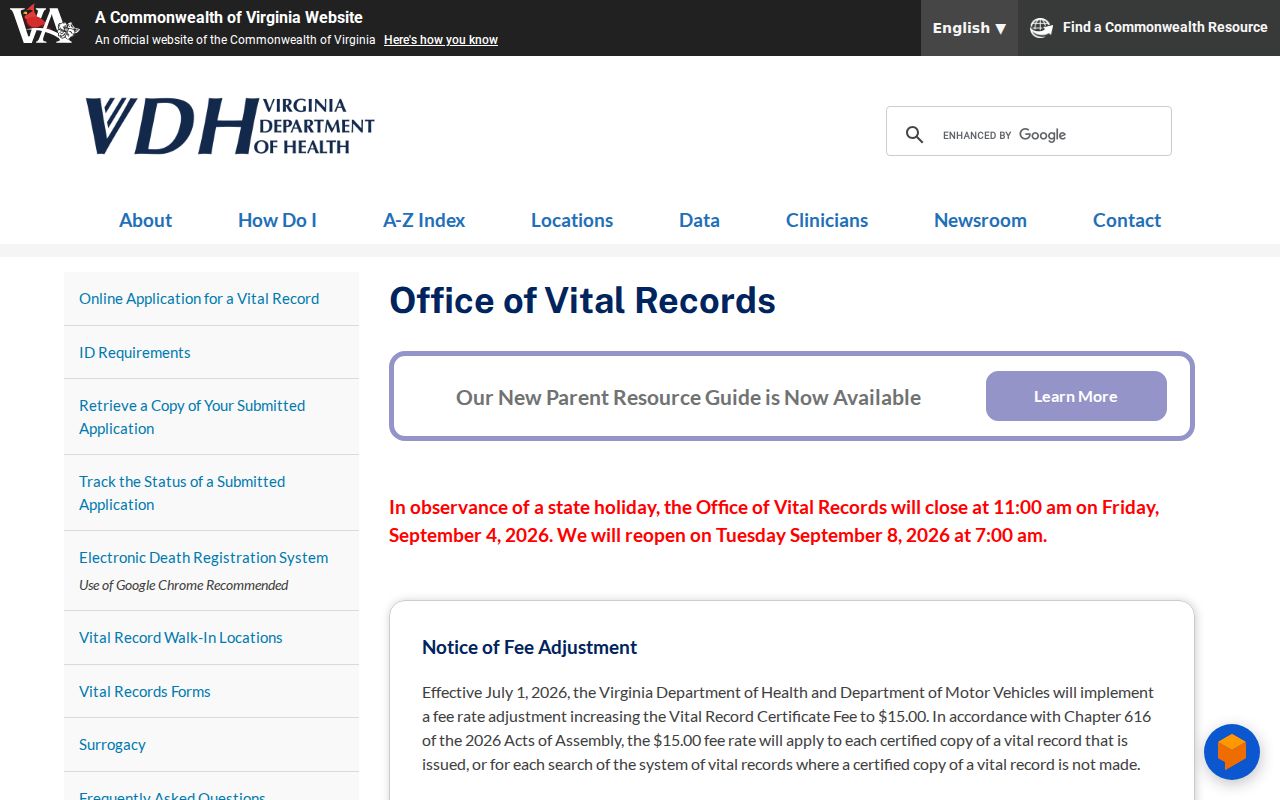
The Virginia Department of Health Vital Records page provides the office rules, forms, and current fee information. Its current notice reports a $15 search or certified-copy fee effective July 1, 2026. Paper requests require an ID copy and signature; the forms page estimates about four weeks by mail and about two weeks online. A DMV counter can forward certain requests, but its page has a different fee notice, so confirm the route and current charge before paying.
For older Fairfax events, the Historic Records Center vital holdings are an important local bridge. The series has Civil War losses, incomplete 1870 to 1897 holdings, and no law-created local series from 1897 through June 1912. Marriage finding aids, probate, newspapers, cemeteries, and church material can provide a better historical lead when a certificate route is unavailable.
Springfield Voter Records, Carefully Used
Virginia's Citizen Portal serves an individual's registration, polling-place, district, absentee-status, and voting-history workflow. Its live identity fields are dynamic, so they should be read on the current form rather than assumed from an old screenshot. The portal does not operate as a public block or household roster, and it does not disclose ballot choices.
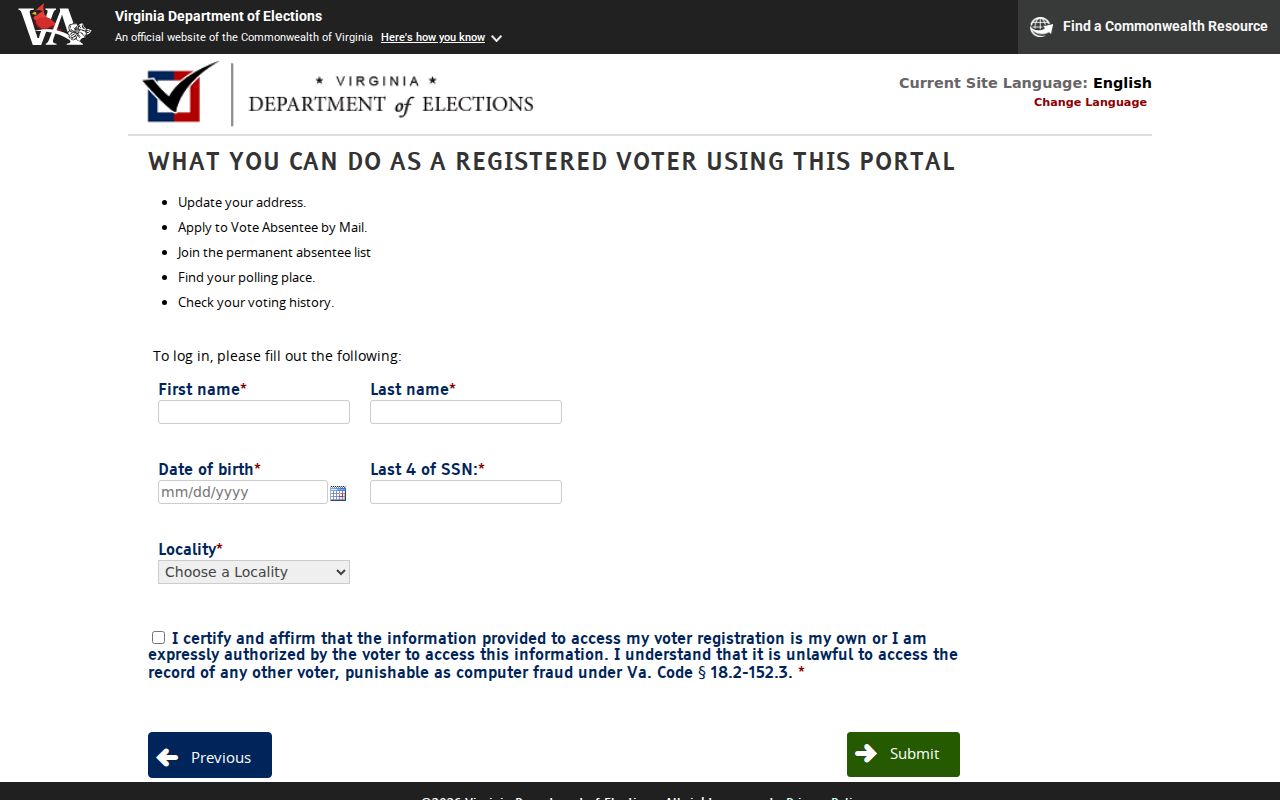
The image shows the official status route, but a result still needs statutory context. Virginia registrar lists can include name, address, year of birth, gender, and election districts for public inspection, while Social Security numbers, protected addresses, day and month of birth in public lists, agency identity, declination, and protected VERIS records are excluded. Four-year voter products and other list products have qualified categories and uses under state law.
The Fairfax elections office is the local contact for precinct and list-maintenance questions. A qualifying request goes through the state's voter-list form and should specify Fairfax County or the appropriate locality and election district, not a fictional Springfield city jurisdiction. Registration is an election record, not proof of present physical occupancy.
Note: Keep voter information tied to the applicable statutory access rule and do not republish excluded fields or protected addresses.
Springfield Resident Lookup Verification Steps
When the task is to connect one person to one place, work from the least sensitive official key toward the record that answers the next question. The sequence below joins records without treating one portal as a complete resident list. It also leaves a clear trail for an heir search, a reconnection effort, or a question about an old household.
- Search the exact address in iCare and save the PIN, situs, mailing line, and visible deed references. Note a withheld owner name rather than trying to bypass it.
- Use the PIN or legal reference in Fairfax land records to distinguish a current owner, earlier grantee, trust, estate, or company from an occupant.
- Run the relevant name variant in eCaseSearch only when a court question exists. Compare case number, role, date, and subtype with the address or other independent key.
- Use the Citizen Portal for an individual's own election information, or follow the qualified list process. Use VDH or HRC only when the event date and eligibility fit the record.
- For a historical person, compare the dated result with Virginia Room directories, yearbooks, newspapers, or maps before stating a past address.
- Docket
- A court case's running list of filings and events, often called the register of actions in an electronic case view.
- Index and image
- An index identifies a record and its reference. An image is the underlying document and may require a terminal, subscription, or clerk request.
- Certified copy
- A copy issued by the custodian with its certification. It is different from an informational web result or an ordinary printout.
A certified copy does not resolve a same-name problem by itself. Its value comes from the custodian, the record reference, and the independent address, date, or relationship detail that connects it to the person being researched.
Springfield Historical and License Leads
A person who cannot be confirmed in a current parcel or court record may appear in a dated local source instead. The Virginia Room holds directories, telephone books, newspapers, yearbooks, maps, microform, and a CPAN terminal. Its printed volumes can show a subscriber, household, business, or address for a specific year. For the collection runs and how to read an entry, use the Springfield Directory Book rather than converting a historical listing into a claim about today.
Official identity sources can also answer narrower questions. The Virginia DPOR License Lookup searches visible name, license, address, and type fields, while State Corporation Commission CIS searches an entity by name or ID. Both can identify a credential or organization. A practice, principal, registered-agent, or office address is not evidence that the person lives there.
The Historic Records Center's Drawer X loose-record series can be a valuable fallback when a deed-book trail is incomplete. It contains material from 1739 to 1972, including missing deed-book originals. That local archive feature is a reason to ask for finding aids and context rather than treating a blank online query as a negative result.
Springfield Resident Lookup Privacy Limits
Public access is not a license to create a current household roster. Fairfax iCare permits online owner-name withholding, while the underlying information remains available through the Department of Tax Administration office or phone. Virginia's Address Confidentiality Program and protective-order provisions can also explain why an address is absent or substituted. A blank field must never be read as proof that a person has left Springfield.
Vital certificates, sealed or confidential court material, juvenile and adoption records, protected voter information, and personal DMV data have their own rules. When a county record is not available through a specialized path, a focused request under the Virginia Freedom of Information Act should name the likely custodian and record, request a redacted copy where appropriate, and accept that a specific confidentiality law can control the answer.
Lawful use. Use official records for personal, lawful research and verification. Do not use a name, address, or record trail to stalk, harass, intimidate, or harm anyone.
Note: Record the source date and its access limit, because an old directory, a withheld assessment name, and a sealed court file mean different things.