
Springfield Previous Residents Sources
Past residents leave different kinds of evidence in different eras. Fairfax land records establish the legal transfer of a parcel. Community and reverse directories create dated address snapshots. Maps and aerials date a place without naming its occupants. Probate, local newspapers, cemetery research, and historical archives can add family or relationship context. Use the source that matches the question, and retain its date. An owner listed on a deed, a subscriber in a telephone book, a mailing addressee, and an occupant named in a directory can all be different people.
| Source | Documented era | Where held | What it can establish |
|---|---|---|---|
| Fairfax deeds and indexes | 1742-present, with index and room distinctions | Circuit Court, CPAN, HRC | Transfers, parties, legal descriptions, plats |
| Hill’s reverse directories | 1966, 1968, 1969, 1971-1973 | Virginia Room guide and regional routes | Printed street-side names and addresses |
| Springfield community directories | 1961 through 1999 in documented series | Virginia Room | Local printed household or community snapshots |
| Maps, tax and biography sources | 1760 and 1860 reference points | Historic Records Center research aids | Tract, tenant, road, and neighboring-owner context |
| PLUS, HistoryMap, and aerials | Historical and current layers; aerials 1937-2025 | Fairfax County portals | Construction, parcel, and development timing |
For a postwar Springfield address, begin with the parcel and its current deed references, then use a reverse directory or community book for the household layer. For an older tract with no street number, begin with the legal description, plat, farm, parish, road, or adjacent owner. The exact source sequence changes with the era, but a two-key match is safer than a same-name guess.
Springfield Previous Resident Parcels
Use the Fairfax iCare address search to normalize the modern address before looking for previous residents. Its form accepts Number, Unit, Street, and Suffix; a wildcard can help with part of a street name. Save the parcel PIN, situs address, subdivision, map number, current deed-book or instrument references, and the date searched. The current card is a navigation tool. It is not a complete household record and its ownership or sale data are not the legally operative deed.
The researched sample at 9003 Penn Manor Court shows why the fields must stay separate: the card has a Springfield situs, a Springfield post-office-box mailing address, visible deed references, and an owner name withheld by request. A withheld online name is not evidence that a parcel lacks an owner. Fairfax says online withholding does not prevent access in the office or by phone.
Note: Keep the PIN with every result because the address text can change while the parcel, legal description, or recorded instrument provides a more stable join.
Springfield Previous Resident Deed Chains
A deed chain traces legal transfers, not everyone who lived at an address. Fairfax Circuit land records reach 1742 to the present. Early deeds are chronologically arranged, post-1866 deed indexes are available through CPAN or courthouse routes, and pre-1945 deed books are in Historic Records Center Suite 317. An address alone is not the legal index key. Use iCare or the Master Address Repository to derive the PIN and current deed clue, then search the names and book or page in the land-record system.
- Record the current PIN, situs, subdivision or lot, and the deed book, page, or instrument reference from the modern parcel card.
- Find the current grantee’s deed through CPAN, a public terminal, or the Clerk’s research route, then copy its prior-instrument reference and legal description.
- Search the earlier seller as a grantee to locate that party’s acquisition, checking the legal description and parcel clues at every turn.
- Repeat backward, logging each grantor, grantee, recording date, book or page, instrument number, deed type, lot or block, and related plat.
- When the chain reaches older books or an index gap, use the Research Room or Historic Records Center rather than filling the break with a same-name result.
- Grantor
- The party transferring an interest in the recorded document.
- Grantee
- The party receiving that interest. A prior grantee can become the later grantor.
- Chain of title
- The ordered series of recorded transfers connecting one legal interest to an earlier one.
- Legal description
- The lot, block, subdivision, metes, bounds, or tract wording that ties an older deed to land more reliably than a modern street label.
Compare the legal description, PIN, lot, block, subdivision, plats, and any prior instrument before treating two deeds as the same property. Parcels can split or merge, deeds can be indexed under a spouse, trustee, estate, or company, and an owner’s mailing address may never match the Springfield situs.
Springfield Previous Resident Research Rooms
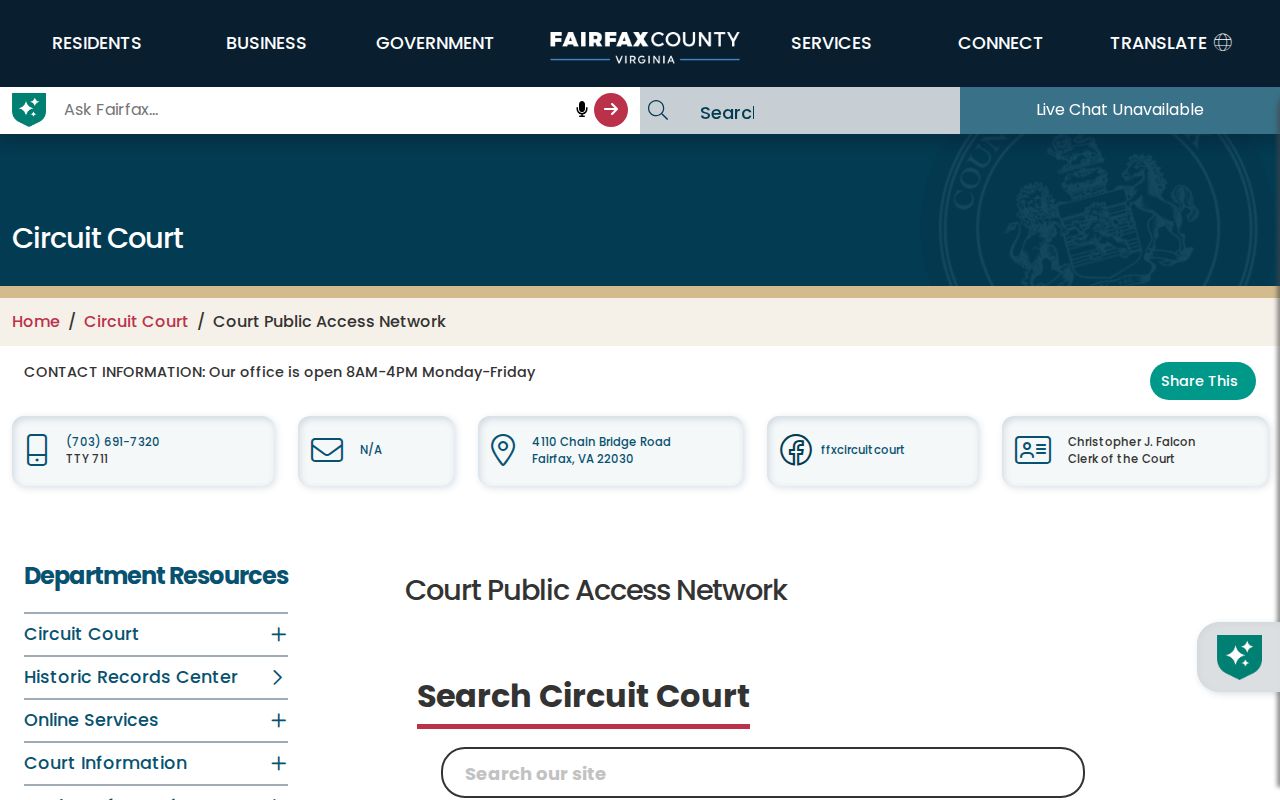
The Fairfax Circuit Court Public Access Network, known as CPAN, is a subscription route for applicable land-record index and image work. The county lists a $150 per-user quarterly charge, requires entity and user agreements, and prohibits account sharing. A public route still exists: the Circuit Court Research Room has terminals, and the Historic Records Center handles older book and archival distinctions. Bring an instrument number or deed book and page when requesting a copy. Certified land copies are listed at $2 per document plus $0.50 per page.
The CPAN access information identifies the subscription and coverage route used for deed-index research.
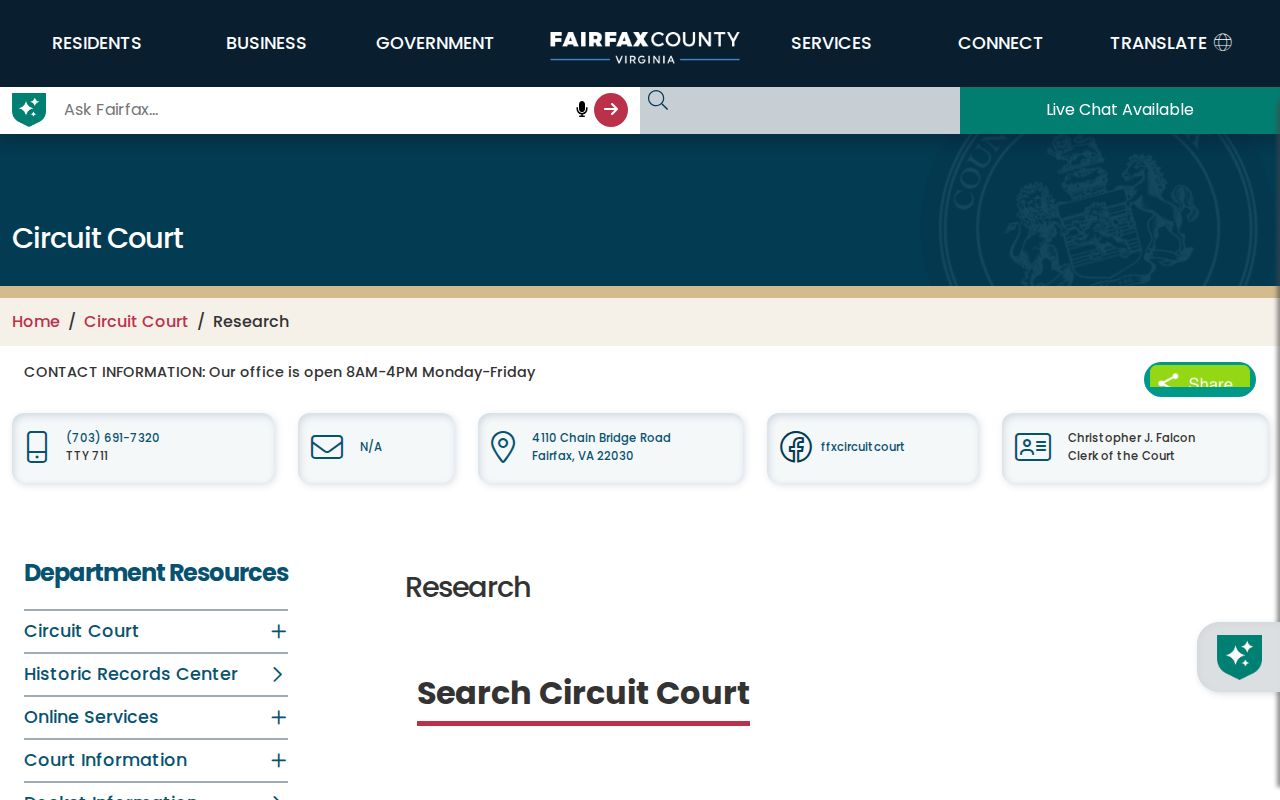
The Circuit Court land-record research page describes the room, historic holdings, and 1742-present land-record framework.
Springfield Previous Resident Roles
Separate the record roles before identifying a past household. A deed names a legal party. An iCare card may show a mailing address and can withhold an online owner name. A directory or telephone book reflects a printed address or subscriber. A permit can name an applicant, contractor, or owner without showing who occupied the site. These are complementary records, not interchangeable labels.
Use a simple process: address to PIN, PIN to deed reference, deed to legal description, then description and year to an address-side directory entry. A current owner may be unrelated to the person printed in an older community directory. Conversely, a long-term occupant can be absent from the title chain. Record the source date and the role shown beside each name.
Springfield Past Household Evidence
Household evidence is the second half of a previous-residents search. Hill’s Alexandria suburban/Fairfax County directories include Springfield in documented 1966, 1968, 1969, and 1971-73 runs. Springfield/Lorton, Kings Park, West Springfield, Springfield Forest, and Edsall Park publications add local snapshots for selected years. Read a criss-cross section from the address side when available, then compare its printed name with the same household in another dated record. The collections themselves are described on the Springfield city directory page.
- Choose the directory edition nearest the address date and transcribe the name, address, year, and page.
- Compare that dated address with the corresponding census schedule or another household record, noting every spelling or address difference.
- Test the result against the deed date, legal description, newspaper, probate, or map before identifying a past household.
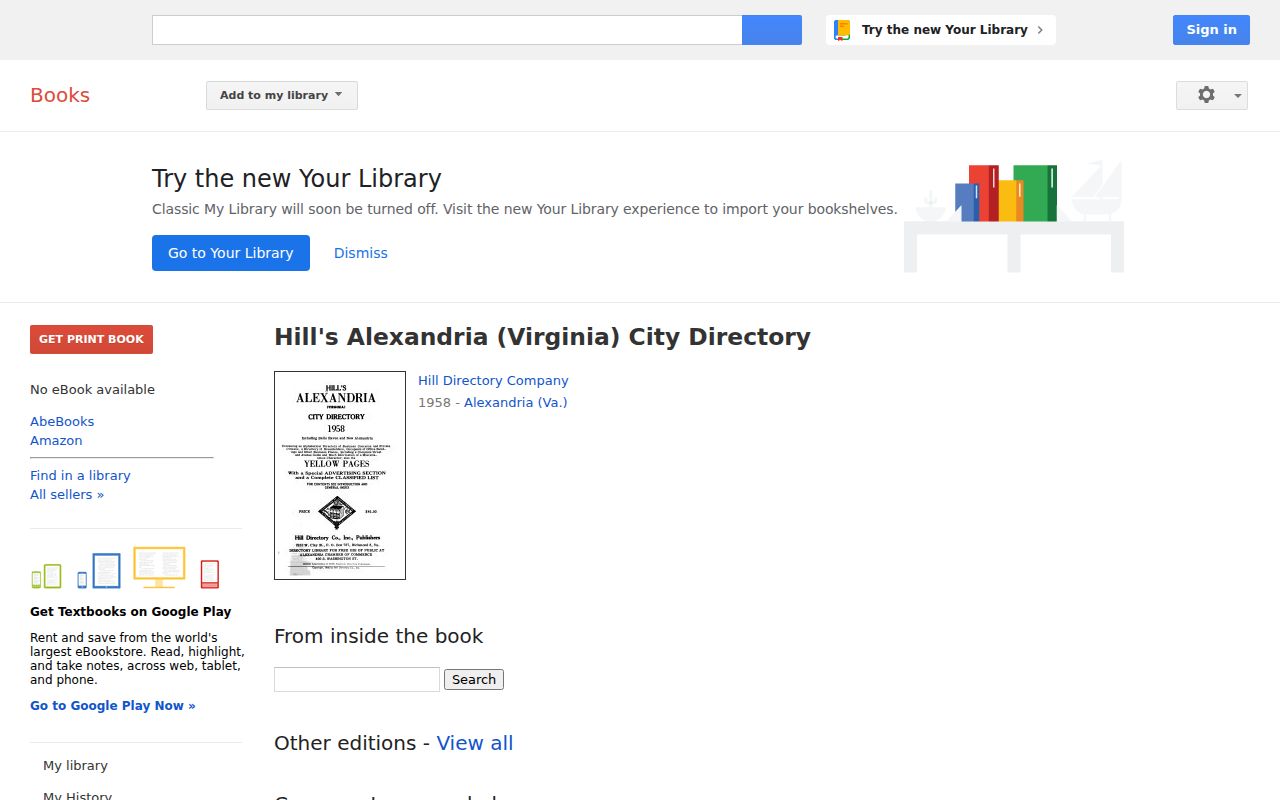
A digitized Hill’s directory record can provide a scan route for regional research.
Pair each available directory year with a corresponding census schedule or other dated household record, then use Virginia Room newspapers and historical newspaper indexes to investigate a move, death, organization, or spelling variant. Probate may identify heirs, executors, spouses, land, and relationships. Fairfax probate originals span 1742-1935, with later probate through CPAN or the courthouse. A missing entry may reflect a publication gap, a voluntary-listing limit, a move, or a changed name.
Lawful use. Use Springfield house-history records for family, estate, and personal research, and never use a past address trail to track, harass, or harm a living person.
Springfield Previous Resident Place Names
Older Springfield research often starts before a modern street address existed. The Historic Records Center has research leads for a 1760 owner and tenant map and an 1860 biography and tax map. Search a farm, tract, parish, road, post office, or adjacent landowner, then connect it to a later plat, directory, aerial, and deed. Springfield Station, Springfield Farm, Corbett, and Springfield are all valid historical terms at different points in the official marker chronology.
That geography matters because the first Springfield post office operated in 1866-68, Corbett appears in 1907, Springfield returns in 1910, and the post office moved in 1953. A rural deed may use a tract description that cannot be found by typing today’s number into an index. The missing Springfield-specific street-renumbering chronology means MAR address-history fields, older maps, plats, directories, and deeds should be used as evidence instead of assuming a particular rename or renumbering date.
Springfield Previous Resident Aerial Dates
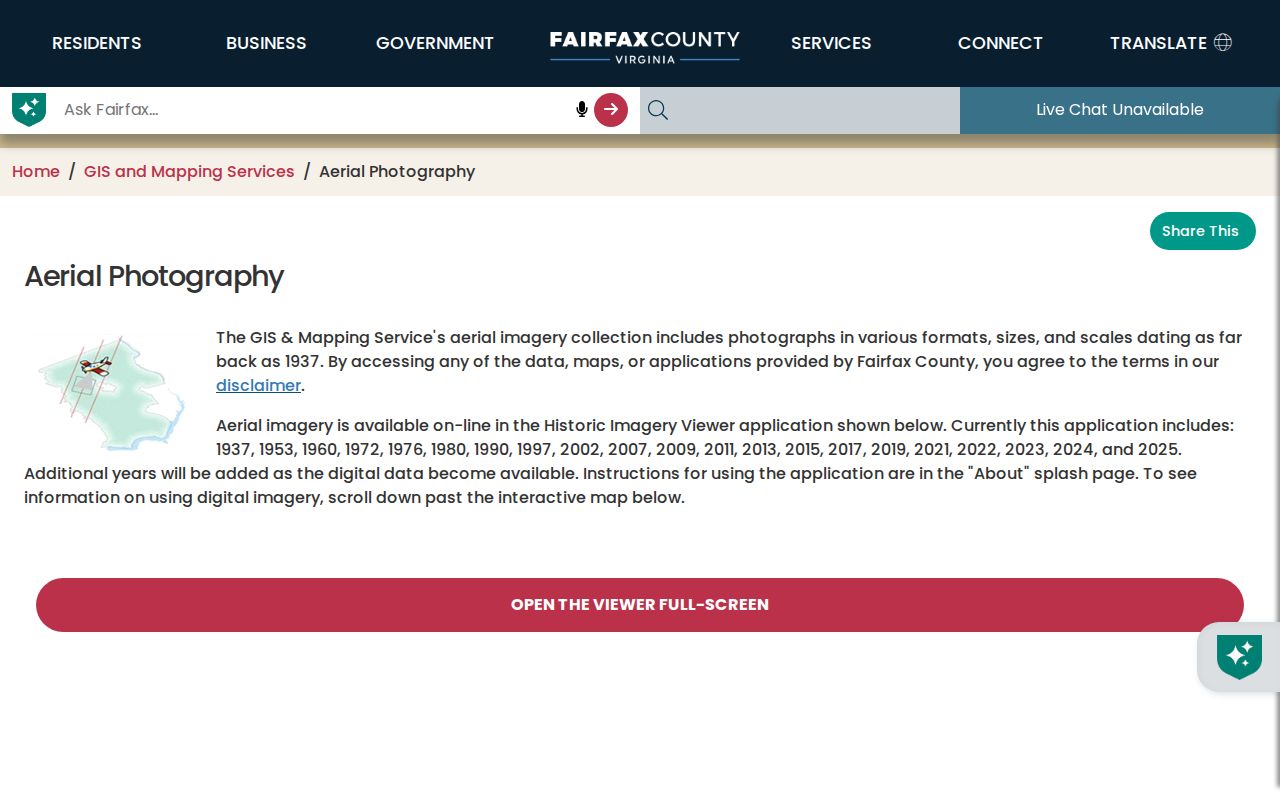
Physical evidence can date a place without identifying a past resident. Fairfax aerial photography is available for 1937, 1953, 1960, 1972, 1976, 1980, and later years through 2025. Compare development, roads, open land, and subdivision shape with the dates in a deed, plat, directory, or permit. Fairfax PLUS can add permits, plans, enforcement, environmental health, fire, planning, site, and zoning records, but an applicant or contractor is not automatically an occupant.
The Fairfax aerial-photography viewer provides the dated image sequence for a Springfield address.
Springfield Previous Resident Gaps
Document a break rather than guessing through it. Fairfax Historic Records Center reports that Civil War troops burned or stole some records, and order books for 1742-48 and the Revolutionary period are missing. Local birth and death holdings have an 1860-65 loss and incomplete 1870-97 series. Chancery material from 1803/1805-1937 is incomplete. An empty online result is therefore not proof that a person never lived in Springfield or that a transfer never occurred.
When a deed book or page seems missing, ask about Drawer X, the Historic Records Center’s loose-record collection spanning 1739-1972. It includes deeds, wills, bonds, powers, and missing deed-book originals. Combine that route with probate, plats, chancery, maps, newspapers, and the Virginia Room’s finding aids. A careful past-residents log records the query, access channel, date, and limitation for every negative search.